In-House vs Agency vs Freelancer: Building Your MVP
Choosing how to build your MVP matters as much as what you build. Here's a clear-eyed comparison of in-house teams, agencies, and freelancers — cost, speed, and risk, without the bias most comparisons have.
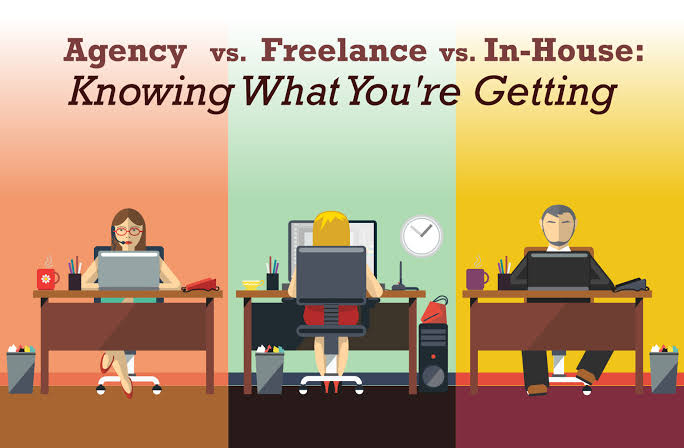
Every early-stage founder hits this decision at some point: hire in-house, go to an agency, or find a freelancer. Most articles on this topic are written by one of those three trying to convince you their option is universally best. It isn't — each one is right in different situations, and picking wrong costs you months and real money.
In-House Team
What it actually costs: Salaries, benefits, recruiting time, equipment, and the ramp-up period before someone is fully productive. Even a lean 2-person in-house team (one backend, one frontend) typically costs more per month than most agency MVP engagements cost for the entire build.
When it's the right call: You've already validated demand, you're past MVP stage, and you need a team that will own the product long-term with deep, compounding context. In-house makes sense when the product is the company, not when you're still testing if the company should exist.
The hidden risk: Hiring takes time you don't have at the idea stage, and a bad early hire is expensive to unwind. Building a team before you've validated the product means you're paying full-time costs for something that might pivot entirely in three months.
Agency / Dev Studio
What it actually costs: Higher than a freelancer's hourly rate, but you're paying for a full team (backend, frontend, PM, QA) without carrying the overhead of hiring each of those roles separately. Most agencies quote fixed-scope pricing for MVPs, which caps your risk.
When it's the right call: You need a full-featured MVP built reliably and on a timeline, without spending months assembling a team. Agencies that specialize in MVP builds have usually solved the "what does this actually need to include" problem dozens of times, which saves you from expensive early mistakes.
The hidden risk: Not all agencies are equal — some outsource further to whoever's cheapest, adding a layer of disconnect between you and the people actually writing code. Ask directly who will be doing the work.
Freelancer
What it actually costs: The lowest hourly rate of the three, but you carry the project management risk yourself — scoping, coordinating, catching issues, and often finding a second freelancer if the first one disappears or can't cover the full stack.
When it's the right call: You have a very narrow, well-defined task (a specific feature, a bug fix, a small integration) and you already have technical judgment in-house to manage and review the work.
The hidden risk: For a full MVP build, one freelancer rarely has every skill needed (backend, frontend, DevOps, QA) at a high level, and coordinating multiple freelancers yourself adds a project management burden most non-technical founders underestimate.
A Simple Framework
Ask yourself three questions:
Do I have validated demand, or am I still testing an idea? Testing → agency or freelancer. Validated → in-house makes more sense.
Do I have the technical judgment to manage freelancers myself? No → agency. Yes, and the scope is narrow → freelancer works fine.
How much does timeline certainty matter? If a delay costs you real money (investor deadline, market window), agencies with fixed-scope commitments carry less risk than either alternative.
Final Thought
There's no universally right answer here — there's the right answer for your current stage, budget, and risk tolerance. Most founders under-invest at the idea stage (going in-house too early) or over-rely on freelancers for something that needed a coordinated team. If you're weighing your options for an upcoming build, talk to us — we'll give you an honest read on whether an agency engagement actually fits your situation, even if the answer is that it doesn't.