Do You Actually Need Custom Software, or Will an Off-the-Shelf Tool Work?
Not every business problem needs custom-built software. Here's a simple framework for knowing when an off-the-shelf tool is genuinely enough, and when it's actually costing you more than a custom build would.
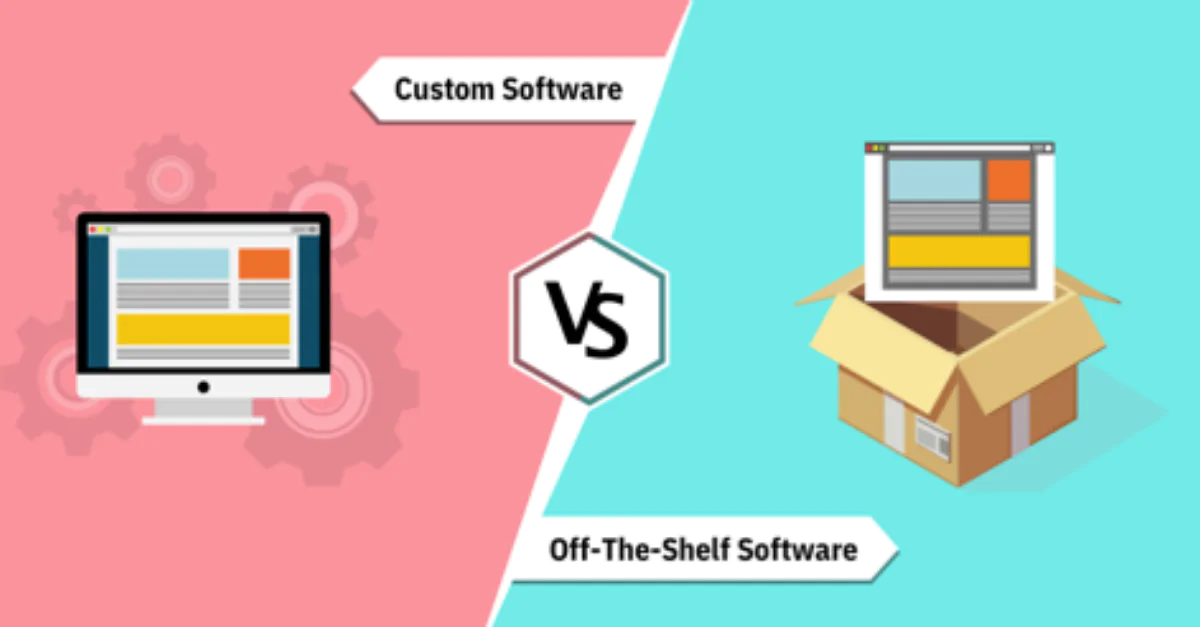
A lot of businesses spend money building custom software for problems an off-the-shelf tool could have solved, and just as many businesses stretch a generic tool far past its limits trying to avoid the cost of custom development. Both mistakes are common, and both are avoidable with a clear framework.
When an Off-the-Shelf Tool Is Genuinely Enough
Your workflow is standard, not specific to your business. If what you need is project management, CRM, email marketing, or basic invoicing, dozens of mature tools already solve this well. Building a custom version of something that already exists and works is rarely a good use of budget.
You need to move fast and validate first. Early-stage businesses testing a new process should generally start with existing tools, even if imperfect, rather than spending months building something custom before knowing if the process itself is right.
The cost of switching later is low. If you're not deeply locked into a tool's data structure or workflow, starting with off-the-shelf and switching to custom later (once you know exactly what you need) carries little risk.
When Custom Software Actually Pays Off
Your workflow is genuinely unique to your business. If you're stitching together three different tools with manual workarounds because nothing fits your actual process, that patchwork is costing you time and error-proneness that custom software would eliminate.
Off-the-shelf tools are creating real operational bottlenecks. If your team routinely works around a tool's limitations, exports data manually to make it usable elsewhere, or avoids features because they don't fit, the tool is now costing you more in lost time than a custom solution would cost to build.
Your product IS the software. If the software isn't just supporting your business, it's what you're actually selling, then "off-the-shelf" isn't really an option in the same way — this is a build decision, not a buy-vs-build one.
You're paying for features you don't use, at a price that scales badly. Some off-the-shelf SaaS tools charge per-seat or per-usage pricing that becomes disproportionately expensive as you scale, when a custom-built equivalent would have a flatter cost curve long-term.
A Simple Way to Decide
List every manual workaround your team currently does around your existing tools. If that list is short and mostly minor annoyances, stick with off-the-shelf. If that list represents real hours lost every week, recurring errors, or workflow steps no tool quite supports, it's worth getting a scoping conversation for what a custom solution would actually cost — because the honest comparison isn't "off-the-shelf is free, custom costs money," it's "what is the current inefficiency actually costing you every month."
Final Thought
The right answer isn't universally "build custom" or "just use existing tools" — it's whichever one actually matches how unique and costly your current workflow problem is. If you're not sure which side of that line your business is on, talk to us — we'll give you an honest read, even if the honest answer is that you don't need us yet.