AI vs Automation: What's the Actual Difference, and Why It Matters for Your Business
"AI" and "automation" get used interchangeably in marketing, but they solve different problems and cost very different amounts to build. Here's the plain-language difference, and how to know which one your business actually needs.
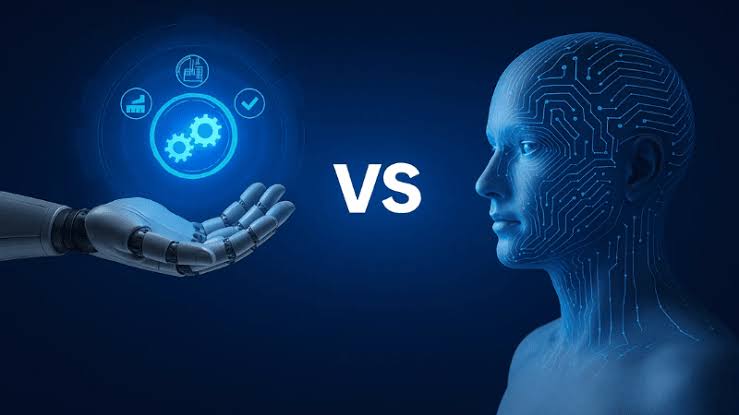
"We use AI" has become a marketing phrase almost detached from what it actually means, and it's led to a lot of confusion for business owners trying to figure out what they actually need. Here's the plain difference between automation and AI, and why picking the right one for your problem saves you real money.
What Automation Actually Is
Automation means a system follows a fixed set of rules to complete a task without a human doing it manually. If X happens, do Y. A new form submission triggers an email. A payment received updates a spreadsheet. An order status change sends a notification.
Automation is predictable by design — it does exactly what it's told, every time, with no judgment or interpretation involved. Tools like n8n, Make, and Zapier are built specifically for this: connecting your existing tools and running rule-based workflows without writing custom code for every integration.
What AI Actually Is
AI, in the context most businesses mean today, refers to systems that can interpret unstructured information, make judgment calls, and generate responses rather than just following fixed rules. A customer support chatbot that actually understands a question phrased in ten different ways and responds appropriately is AI. A system that reads an email and decides which department it should be routed to, based on content rather than a fixed keyword rule, is AI.
The key difference: automation follows rules, AI makes judgment calls based on patterns and context.
Why This Distinction Actually Matters for Your Budget
Automation is significantly cheaper and faster to build than AI, because rule-based logic is simpler to design, test, and maintain than a system that needs to handle open-ended, unpredictable input reliably. If your problem can be solved with clear if-this-then-that logic, building a full AI system for it is unnecessary cost and complexity.
Conversely, trying to force automation to handle a genuinely unpredictable, judgment-based task usually results in a system that breaks constantly as soon as a real user does something the fixed rules didn't anticipate.
How to Tell Which One You Actually Need
You need automation if: the task follows a clear, consistent pattern every time, the inputs are structured and predictable (form fields, database triggers, scheduled events), and there's no real judgment call involved in what should happen next.
You need AI if: the task involves interpreting open-ended text or unstructured input, requires understanding context or intent rather than matching exact patterns, or needs to generate a response rather than just execute a fixed action.
You often need both, working together. A common and effective pattern: AI handles the judgment call (understanding what a customer is actually asking, or classifying an unstructured document), and automation handles the resulting structured action (updating a record, sending a notification, triggering a workflow) based on that AI-generated decision.
A Practical Example
A support inbox that automatically tags incoming emails by department based on the sender's email domain is automation — that's a fixed rule. A support inbox that reads the actual content of the email, understands what the customer is asking regardless of how they phrased it, and routes it to the right team based on that understanding is AI. Many businesses actually need the second one but get sold the first one because it's cheaper to build and easier to market as "AI-powered."
Final Thought
Neither automation nor AI is inherently better — they solve different kinds of problems, and using the wrong one either wastes money on unnecessary complexity or leaves you with a brittle system that breaks the moment real-world input gets messy. If you're not sure which one your actual workflow needs, talk to us — we'll give you an honest read before recommending the more expensive option just because it sounds more advanced.