Multi-Agent Orchestration Explained for Non-Technical Founders
Multi-agent AI systems sound complicated because most explanations are written for engineers. Here's what founders actually need to know: what it is, when your product needs it, and when it's overkill.
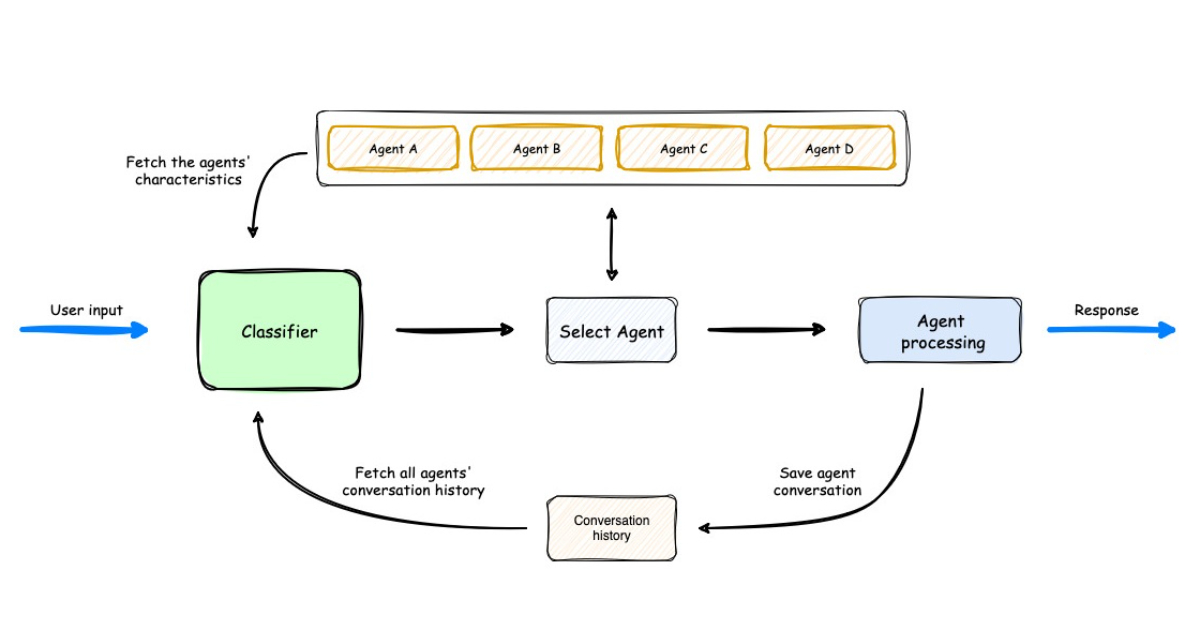
"Multi-agent orchestration" is one of those terms that gets thrown around in AI pitch decks without much explanation, which leaves founders either overestimating what they need or dismissing it entirely because it sounds like unnecessary complexity. Neither reaction is right. Here's the plain version.
What a Single AI Agent Actually Is
Before multi-agent makes sense, single-agent needs to be clear. An AI agent is a system that can take an instruction, decide what steps are needed to complete it, use tools (search the web, query a database, call an API) to gather information or take action, and produce a result — without a human manually directing each step.
A basic chatbot that answers questions from a knowledge base isn't really an agent. A system that reads a customer's question, decides it needs to check an order status, calls your order API, and then drafts a reply — that's an agent.
What "Multi-Agent" Adds
Multi-agent orchestration means splitting a complex task across several specialized agents instead of asking one general-purpose agent to do everything. Each agent has a narrow job, and an orchestrator (a coordinating layer) manages the handoffs between them.
Think of it like a team instead of one overworked generalist. One agent might be responsible for research, another for drafting content, another for fact-checking or formatting, and the orchestrator decides the order of operations and passes results between them.
Why Bother Splitting Tasks Up at All
A single agent trying to do too much in one pass tends to lose accuracy — it has to hold too much context, follow too many instructions at once, and errors compound. Breaking the task into specialized agents, each with a tightly scoped job and its own clear instructions, tends to produce more reliable, more accurate results, especially for multi-step workflows.
It also makes systems easier to debug and improve. If a research step is producing bad results, you can fix just that agent instead of untangling one giant, do-everything prompt.
When Your Product Actually Needs This
Multi-agent systems earn their complexity when:
Your workflow has genuinely distinct stages that benefit from different context, tools, or reasoning styles (e.g. one agent researches, another writes, another reviews for compliance)
Tasks require calling multiple different tools or data sources in a coordinated sequence
You need parallel work happening (multiple agents working on different sub-tasks simultaneously) to keep response times reasonable
Accuracy matters enough that a review/verification agent checking another agent's output is worth the added cost and latency
When It's Overkill
If your product needs a chatbot that answers FAQs, summarizes documents, or handles a single well-defined task, a single well-prompted agent with good retrieval (see our piece on RAG vs fine-tuning) will outperform a multi-agent system on cost, speed, and reliability. Multi-agent systems add latency (more steps means more time) and cost (more model calls means a bigger bill), and introduce more places where something can go wrong in the handoff between agents.
The founders who get burned here are usually the ones who reach for multi-agent architecture because it sounds impressive to investors, not because the product actually needs it.
A Simple Way to Decide
Ask: does this task have genuinely separate phases that need different expertise, tools, or context? If yes, and if a single agent handling all of it produces noticeably worse results in testing, multi-agent is worth building. If the task is really one job with a few steps, keep it simple — a single agent with well-structured prompting and good tool access will get you there faster and cheaper.
Final Thought
Multi-agent orchestration isn't a status symbol — it's an architecture decision that should be driven by where a single agent actually breaks down, not by what sounds most sophisticated in a demo. If you're evaluating whether your product needs this level of complexity, talk to our AI team — we'll help you figure out the simplest architecture that actually solves your problem.